
David Joyner, President of US Bullion Reserve
Platinum and palladium investment for serious investors begins with an uncomfortable fact: the two metals are mined together, yet their prices can move in opposite directions for reasons unrelated to gold. Palladium's fortunes are tied closely to gasoline-engine catalysts. Platinum's rest on a wider mix of diesel catalysts, jewelry, industrial uses, and the possibility of a hydrogen economy.
Neither metal behaves like gold, and neither is guaranteed to diversify a portfolio. In the first half of 2026, both fell by roughly a quarter, a reminder that industrial precious metals can drop sharply even when the case for owning them sounds strong.
Each metal's investment case and main risks come first, using dated figures from the industry bodies that publish them, followed by product formats, costs, and IRA rules. It does not recommend a metal or an allocation; it gives you the questions that should decide both.
Platinum and Palladium Investment for Serious Investors: The Case for Each Metal
Both are platinum group metals, valued for their catalytic properties, but their demand stories have diverged. Understanding which story you are buying into matters more than the metal's name.
Platinum: Broad Demand, Shifting Balance
Platinum demand spans automotive catalysts, jewelry, chemical and petroleum refining, glass, and medical uses. The World Platinum Investment Council's Platinum Quarterly for Q2 2026 forecasts 5% growth in industrial demand for 2026, alongside a 4% fall in automotive demand and a 15% drop in jewelry demand as high prices and weak consumption weigh on China.
The supply picture is more nuanced than a simple shortage story. The Council revised the 2025 deficit to more than 1.4 million ounces, but its 2026 forecast shows a modest surplus of 265,000 ounces. Even so, it projects above-ground stocks at just 3.4 months of global demand by the end of 2026. The longer-term upside case rests on hydrogen, where platinum is a leading catalyst for electrolyzers and fuel cells; that is a scenario that depends on adoption at scale, not a forecast.
Palladium: Concentrated Demand, Clear Exposure
Palladium's demand is concentrated in the automotive sector, which industry estimates put at roughly 80% of use, mostly in catalytic converters for gasoline engines and hybrids. That concentration gives investors a direct, understandable exposure: palladium tends to do well when gasoline and hybrid vehicle production holds up.
The same concentration is the main risk. Each fully electric vehicle removes a catalytic converter, although hybrids still need one. If palladium stays expensive relative to platinum, automakers can redesign catalysts to use more platinum, and those changes can take years to appear in demand data.
What Could Change the Case for Either Metal
For platinum, the key variables are industrial growth, jewelry demand in China, and whether hydrogen technologies scale. For palladium, they are the pace of battery electric vehicle adoption, the resilience of hybrid production, and any substitution toward platinum. An investor in either metal is taking a view on these variables, whether stated or not.
What Drives Platinum and Palladium Prices?
Supply shocks, automotive demand, and investor flows all move these metals, and any one can dominate a quarter. That mix makes them considerably more volatile than gold.
Concentrated Mining and Slow Supply Response
South Africa produces most of the world's mined platinum, and Russia is a major palladium source. Power shortages, labor disputes, sanctions, or trade restrictions in either country can move prices quickly. New mines take years to develop, so supply responds slowly to higher prices.
Recycling of spent catalytic converters fills part of the gap and tends to rise with price. Because supply risk sits in so few places, headlines from two countries can matter more to these metals than to gold, whose production is spread widely.
Price Swings in 2026
The LBMA's Q2 2026 market report shows how sharp the moves can be. Platinum fell 20.42% and palladium 17.79% in the second quarter; for the first half of 2026, platinum was down 26.54% and palladium 26.02%. The report linked broader precious metals weakness in that period to inflation concerns following an oil price rise.
Drawdowns of that size are useful for sizing. If a decline of about a quarter in six months would force a sale, the position is larger than your tolerance. History can describe volatility, but it cannot say when a price ratio, such as platinum to gold, will revert.
How Might They Fit Beside Gold and Silver?
Gold is held largely as a monetary asset, and silver sits between money and industry. Platinum and palladium are industrial metals first, which shapes how they behave in a portfolio.
Testing the Diversification Case
Diversification is worth testing with data rather than assuming. In some past sell-offs, platinum and palladium fell alongside equities because investors expected weaker industrial demand. Check how each metal moved against your holdings in periods of stress, such as 2008 and early 2020.
Three questions help frame a position in either metal:
Correlation in stress: did the metal fall with stocks when you would most want protection?
Drawdown tolerance: could you hold through a decline of 25% or more without selling?
Thesis clarity: can you state which demand driver you are relying on, and what would change your view?
When Each Metal's Case Is Strongest
The platinum case is strongest for an investor who expects broad industrial demand to hold, sees stocks as tight, and is willing to wait on hydrogen. The palladium case is strongest for an investor who expects gasoline and hybrid vehicles to remain important longer than many forecasts assume. Some investors hold both to spread across these drivers; others hold neither. The decision depends on your views and risk tolerance, and a financial advisor can help size any position against the rest of your portfolio.
Comparing Ways to Invest
Large buyers can hold physical metal, exchange-traded products, or futures. Each route carries different costs, custody arrangements, and exit mechanics.
Physical Coins and Bars
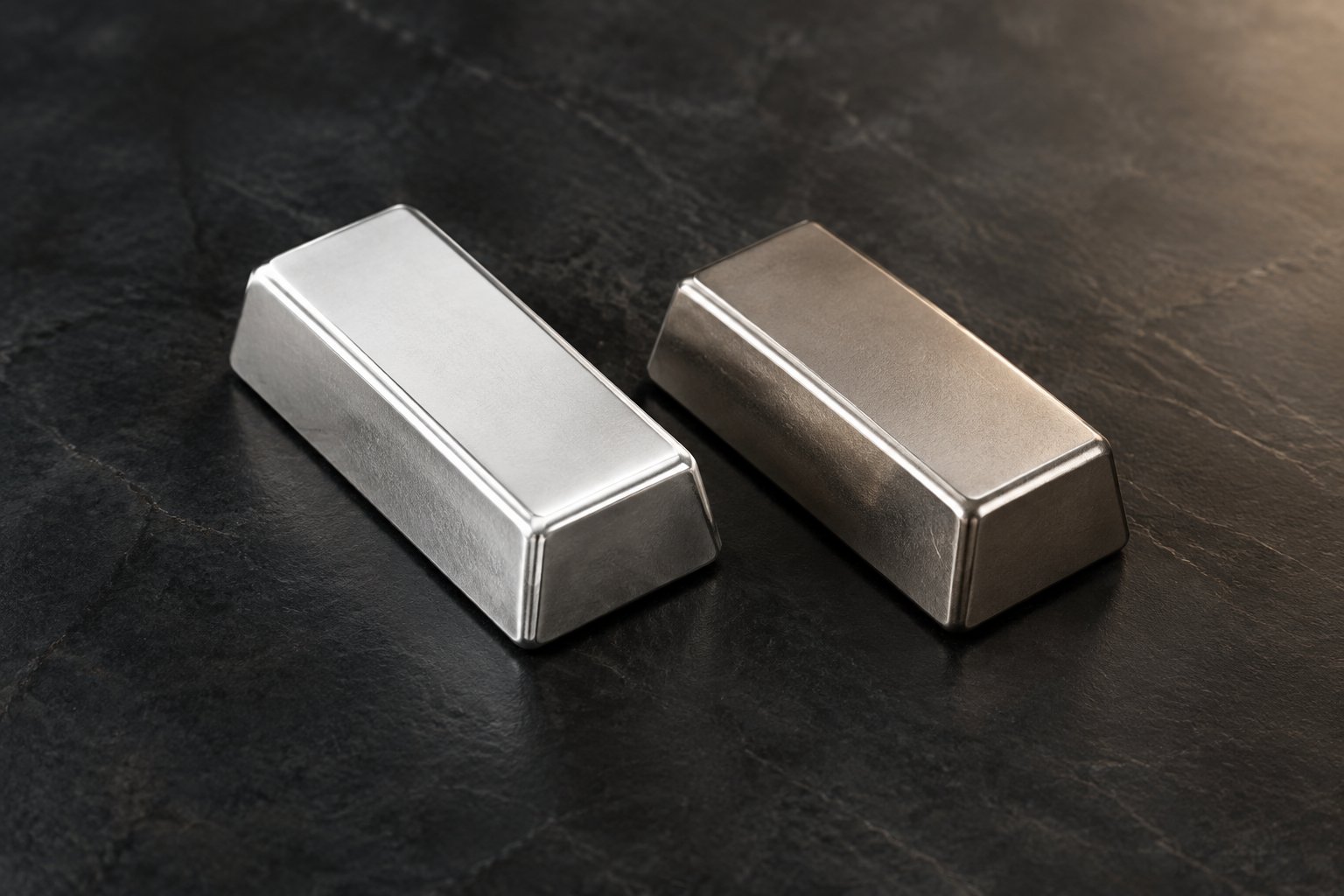
Physical metal gives direct ownership with no fund or issuer between you and the ounces, in exchange for storage, insurance, and resale logistics. The American Platinum Eagle carries a $100 face value, the highest of any U.S. legal tender coin, and the Canadian Platinum Maple Leaf is struck at .9995 fine. Bars from recognized refiners generally carry lower premiums than coins, since you pay less for design and minting.
Supply of physical palladium products is thinner than for gold or silver, so availability and premiums can vary more. Get quotes for the specific products you would hold.
Premiums, Spreads, and Order Pricing
Your real cost is the purchase price above spot, plus storage over time, minus the spread given up at sale. The joint FINRA and CFTC investor bulletin recommends getting the dealer's buy-back price before handing over any money.
Pricing structures differ. US Bullion Reserve publishes premiums based on the total order rather than the product, starting at 5% above dealer cost for orders of at least $50,000 and falling to 4% once the total passes $250,000 and 3% once it passes $500,000. Those are the company's own rates. This comparison of wholesale and retail markups explains how order-level pricing differs from per-product retail pricing.
Exchange-Traded Products and Futures
Exchange-traded products remove storage from the investor's to-do list but add fund fees and structure. Some physically backed products are closed-end trusts, whose shares can trade at a premium or a discount to the value of the metal they hold, and some carry non-U.S. tax classifications that add filing work. Exchange-traded funds create and redeem shares through large authorized participants, so ordinary holders buy and sell on the market.
Platinum and palladium futures offer leverage and precise hedging, along with margin calls and the cost of rolling contracts. They suit active traders more than long-term holders seeking simple exposure.
Holding Platinum or Palladium in an IRA
Retirement accounts can own both metals, provided each product meets the tax code's standard and stays with the account's trustee or custodian rather than at home.
Product and Custody Checks
Bullion must meet a minimum fineness of .9995 for both metals, and the American Platinum Eagle qualifies as a coin named in the tax code. Custodians keep their own accepted-product lists, so confirm the exact coin or bar, its purity, and its maker in writing before funding. Proof coins and limited editions carry higher premiums, and not every custodian accepts them.
Expect setup, annual custodian, and storage fees. This overview of Gold IRA custody and storage explains how metals are delivered to an approved depository and held there.
Choose the Exposure Before Choosing the Metal
A palladium bar held for ten years, a platinum fund held for six months, and a futures hedge are three different investments. Deciding the time horizon, custody arrangement, and exit plan first makes the choice between metals clearer. For platinum and palladium investment for serious investors, the useful question is which demand driver you are willing to rely on, and how much volatility you can hold through while it plays out.
Platinum and palladium availability changes more often than gold's, so current product lists matter. To check what is in stock and which order-level tier would apply, schedule a pricing conversation with US Bullion Reserve, or call 1.855.655.4653 to speak with a specialist.
Frequently Asked Questions
What Drives Platinum Demand Compared With Palladium Demand?
Platinum demand spans automotive catalysts, jewelry, and a range of industrial uses, with hydrogen technologies as a possible future source. Palladium demand is concentrated in automotive catalysts, which industry estimates put at roughly 80% of use, so it is more exposed to changes in vehicle technology.
Is the Platinum Market in Deficit?
It depends on the year. The World Platinum Investment Council revised the 2025 deficit to more than 1.4 million ounces, but its Q2 2026 forecast shows a surplus of about 265,000 ounces for 2026, with above-ground stocks projected at 3.4 months of demand by year-end.
How Volatile Were Platinum and Palladium in 2026?
According to the LBMA, platinum fell 20.42% and palladium 17.79% in the second quarter of 2026. For the first half of the year, platinum was down 26.54% and palladium 26.02%.
Can Platinum or Palladium Be Held in a Self-Directed IRA?
Yes, if the product meets the .9995 fineness standard for bullion or is a coin named in the tax code, such as the American Platinum Eagle, and the IRA's trustee or custodian holds it. Custodians may accept only certain products, so written confirmation before purchase is important.
What Should Buyers Compare Before Purchasing Platinum or Palladium Bars?
Buyers should compare the price above spot, the dealer's written buy-back price, the bar's refiner and purity, and storage and insurance costs over the holding period. Product availability can vary more than for gold, so quotes should be current.
This content is for educational purposes only and is not investment, tax, or legal advice. Consult a licensed financial advisor before making investment decisions.