David Joyner, President of US Bullion Reserve
IRA-eligible gold and silver requirements explain a puzzle that surprises many buyers. Place a 22-karat American Gold Eagle next to a 22-karat South African Krugerrand of the same weight, and only the Eagle can go into a self-directed IRA. The reason has nothing to do with gold content, price, or how either coin is marketed.
Eligibility rests on four separate questions: whether an item is a coin the law names, whether it is bullion that meets a minimum fineness, whether the right party holds it, and whether your custodian will accept it. The first three come from the tax code. The fourth is a business decision by the custodian, and it can be stricter than the law.
At $50,000 or more, a wrong product choice can turn a tax-deferred purchase into a taxable distribution. The sections below take each question in turn so you can check a product before any funds move.
Where the Rules Come From
The Internal Revenue Code starts from a strict position. Under Section 408(m), if an IRA acquires a collectible, the cost is treated as a distribution to the account owner. Metals and coins are listed among collectibles, so without an exception they would not belong in an IRA at all.
Section 408(m)(3) supplies that exception. It removes two groups of items from the collectible rule: certain coins, and certain bullion. IRS Publication 590-A summarizes the result in its discussion of investment in collectibles, and the Taxpayer Relief Act of 1997 is what extended the exception to bullion.
IRA-Eligible Gold and Silver Requirements: Two Separate Paths
The two paths work differently, and mixing them up causes most eligibility mistakes:
Coins named by law: gold coins described in specific paragraphs of 31 U.S.C. 5112 (the American Gold Eagle series), the American Silver Eagle, the American Platinum Eagle, and coins issued under the laws of any U.S. state. These qualify because the statute names them.
Bullion meeting a fineness standard: gold, silver, platinum, or palladium bullion at or above the minimum fineness a regulated futures exchange requires for delivery, held in the physical possession of the IRA's trustee.
A named coin does not need to meet the bullion fineness standard. Any other coin or bar has to qualify as bullion.
Bullion Fineness Standards
The statute does not print a fineness number. It points to the purity that a contract market requires for metal delivered against a regulated futures contract. In practice, custodians apply these minimums:
Gold: .995
Silver: .999
Platinum: .9995
Palladium: .9995
Fineness is required for the bullion path, but it is only one condition. The same statutory clause requires the IRA's trustee, meaning a bank or an IRS-approved non-bank trustee, to hold the bullion, and custodians add their own product standards on top.
Which Gold Products Qualify, and by Which Path?
Most widely traded gold bullion coins and bars from recognized refiners qualify. The path each one uses matters when a question comes up.
The American Gold Eagle and Other Named Coins
The American Gold Eagle is 22 karat, about 91.67% gold. It qualifies because the statute names it, not because of its fineness. The Krugerrand, also 22 karat, is not named in the statute and falls below the .995 bullion standard, so it does not qualify. The same applies to gold Britannias struck at 22 karat before 2013; current issues are .9999 fine.
The statute refers to the coin, not its finish, so American Gold Eagle proofs are described by the same provision as the bullion versions. Custodians do not all treat proofs the same way, however, so confirm acceptance in writing before paying a proof premium.
Gold Coins and Bars That Qualify as Bullion
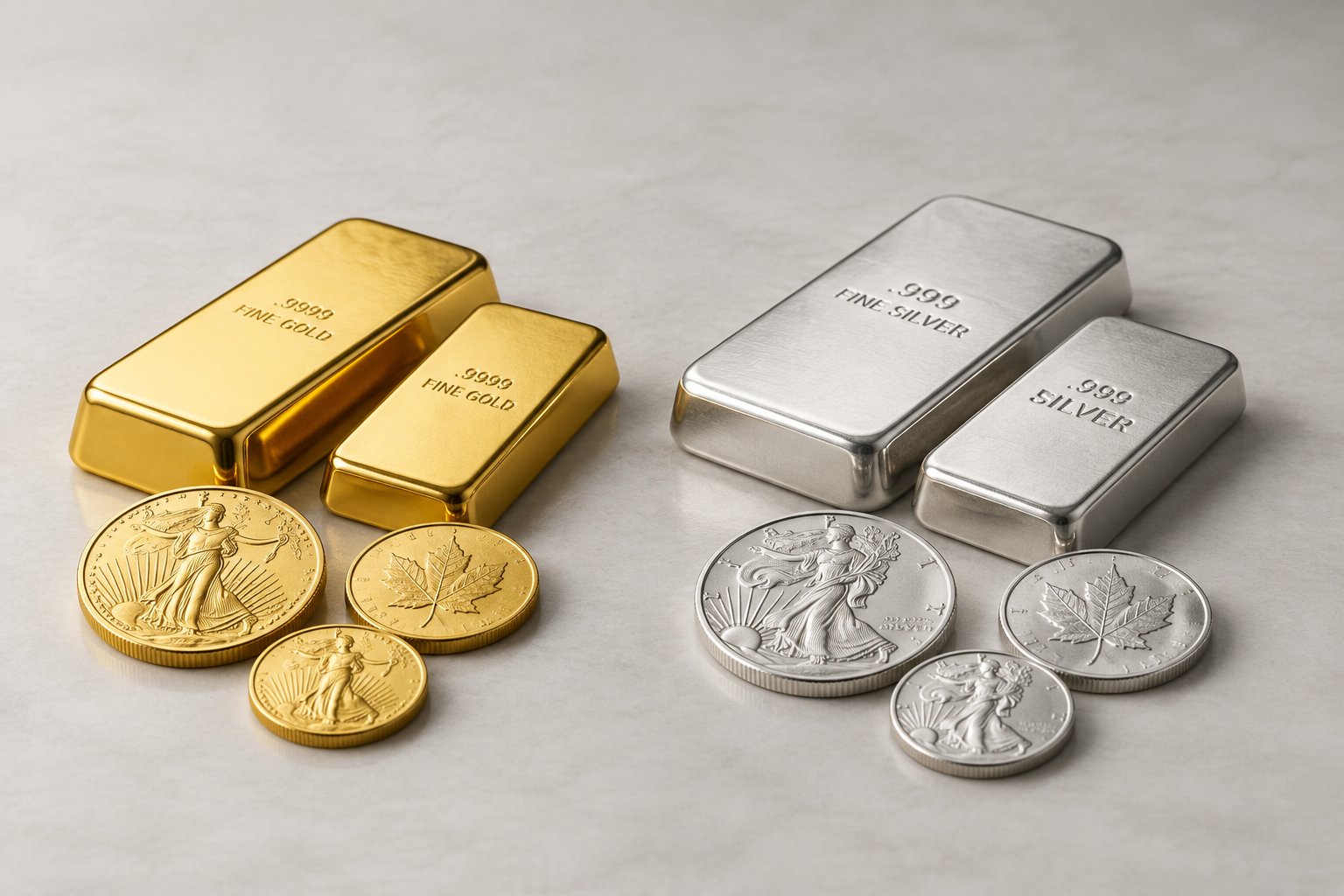
These gold coins meet the bullion standard at .9999 fine: the American Gold Buffalo, Canadian Gold Maple Leaf, Australian Gold Kangaroo, Austrian Gold Philharmonic, and current British Gold Britannia. Note that the Buffalo qualifies through the bullion path rather than as a named coin.
For bars, check the fineness stamp (.995 or higher), the refiner's mark, the weight, and a serial number where applicable. Many custodians accept only bars from refiners on recognized lists such as the LBMA Good Delivery List, and some limit bar sizes. Those are custodian conditions, not statutory ones.
Which Silver Products Meet the Standard?
Silver bullion must be at least .999 fine. The American Silver Eagle also qualifies as a named coin.
Silver Coins Commonly Accepted
Commonly accepted silver coins include the American Silver Eagle, Canadian Silver Maple Leaf (.9999), Austrian Silver Philharmonic (.999), Australian Silver Kangaroo, current British Silver Britannia (.999), and Mexican Silver Libertad (.999).
Year matters for some coins. Silver Britannias issued before 2013 were struck at .958 fine, below the .999 standard, so they do not qualify even though later issues do.
When Silver Bars Qualify
Silver bars qualify as bullion when they are at least .999 fine and held by the trustee. Custodians commonly require a recognized refiner or national mint; generic rounds and bars from unknown makers are a frequent reason for rejection.
Large silver holdings also raise practical questions that are separate from eligibility, such as depository space and how storage is billed. Those affect cost, not whether the metal is allowed.
Platinum, Palladium, and Common Misconceptions
Platinum and palladium face the highest fineness bar of the four metals. Other products fail for reasons unrelated to purity.
Platinum and Palladium Standards
Both metals must reach .9995 fine for the bullion path. The American Platinum Eagle also qualifies as a named coin. The Canadian Platinum Maple Leaf and Canadian Palladium Maple Leaf, both .9995 fine, qualify as bullion. Supply is thinner for these metals, so fewer bar makers and products are available.
Price and Labels Do Not Decide Eligibility
A high price does not by itself make an item ineligible, and a "bullion" label does not make it eligible. What matters is whether the item is a named coin or bullion meeting the fineness standard, and whether it is held correctly. Terms such as "collectible," "semi-numismatic," or "limited edition" are marketing language, not legal categories.
A large premium over metal value can be a warning sign, though. It may mean an item is being sold for scarcity or collector appeal rather than as bullion, which is precisely the question to put to the custodian before buying. Graded rare coins, pre-1933 gold coins, and gold jewelry generally fall outside both paths.
Paper and Fund Exposure
Gold certificates and exchange-traded funds are not physical bullion held by your trustee. Some IRAs can hold ETF shares as securities, but those holdings are governed by different rules and are not part of the physical-metal exception.
Who Holds the Metal and Who Approves It
A product that meets the statute can still create a tax problem if the wrong party holds it, and it can still be refused by a custodian.
Who Must Hold IRA-Owned Metals
The IRA's trustee or custodian holds the metal, typically at an approved depository. The dealer ships directly to the depository, and the custodian records the holdings. Storage can be segregated, where your specific pieces are kept apart, or commingled, where like-kind metal is pooled.
Home storage is where costly mistakes happen. In McNulty v. Commissioner (2021), the U.S. Tax Court ruled that American Eagle coins bought through a self-directed IRA and kept at the owner's home were taxable distributions, and it upheld accuracy-related penalties. This explanation of how a self-directed IRA holds metal covers the custody arrangements in more depth.
Why Custodian Acceptance Is a Separate Test
Custodians and depositories set their own accepted-product lists. They may exclude certain proofs, bar sizes, or refiners, even when the law allows them. A coin that passes the statute can still be refused, so the practical sequence is to confirm the exact product, year, and maker with the custodian in writing before funding.
IRA contributions must be made in cash, which also means metal you already own cannot be moved into the account. The IRA buys new metal through its custodian.
Confirm Eligibility Before Funds Move
IRA-eligible gold and silver requirements come down to one sequence: identify which path a product uses, check its fineness or its statutory name, make sure the trustee will hold it, and get the custodian's written acceptance. The law sets the floor; the custodian sets the working list above it. Adding these pre-purchase questions to that sequence covers pricing and fees as well.
US Bullion Reserve supplies IRA-eligible gold, silver, platinum, and palladium and coordinates delivery to approved depositories through its Gold IRA setup and product guidance. To check a specific product against your custodian's list, call 1.855.655.4653 or confirm eligible products with a specialist.
Frequently Asked Questions
Why Does the American Gold Eagle Qualify When the Krugerrand Does Not?
Both coins are 22 karat, but Section 408(m)(3) names the American Gold Eagle directly, so it does not need to meet the bullion fineness standard. The Krugerrand is not named and falls below the .995 minimum for gold bullion, so it does not qualify.
What Fineness Do Gold, Silver, Platinum, and Palladium Need?
Bullion must meet the minimum fineness required for delivery against a regulated futures contract. Custodians apply .995 for gold, .999 for silver, and .9995 for platinum and palladium. Coins named in the statute qualify without meeting these standards.
Does a High Premium Make a Coin Ineligible for an IRA?
Not by itself. Eligibility depends on whether the item is a coin named in the statute or bullion meeting the fineness standard, and on proper custody. A large premium can signal that an item is being sold for collector value, which is a reason to confirm eligibility with the custodian first.
Can Metal an Investor Already Owns Be Contributed to an IRA?
No. IRA contributions must be made in cash. The IRA can buy eligible metal through its custodian, which then arranges storage at an approved depository.
Can a Custodian Refuse a Product That Meets IRS Standards?
Yes. Custodians and depositories set their own accepted-product lists, which can exclude certain proofs, bar sizes, or refiners. Written confirmation from the custodian before purchase avoids that problem.
This content is for educational purposes only and is not investment, tax, or legal advice. Consult a licensed financial advisor before making investment decisions.